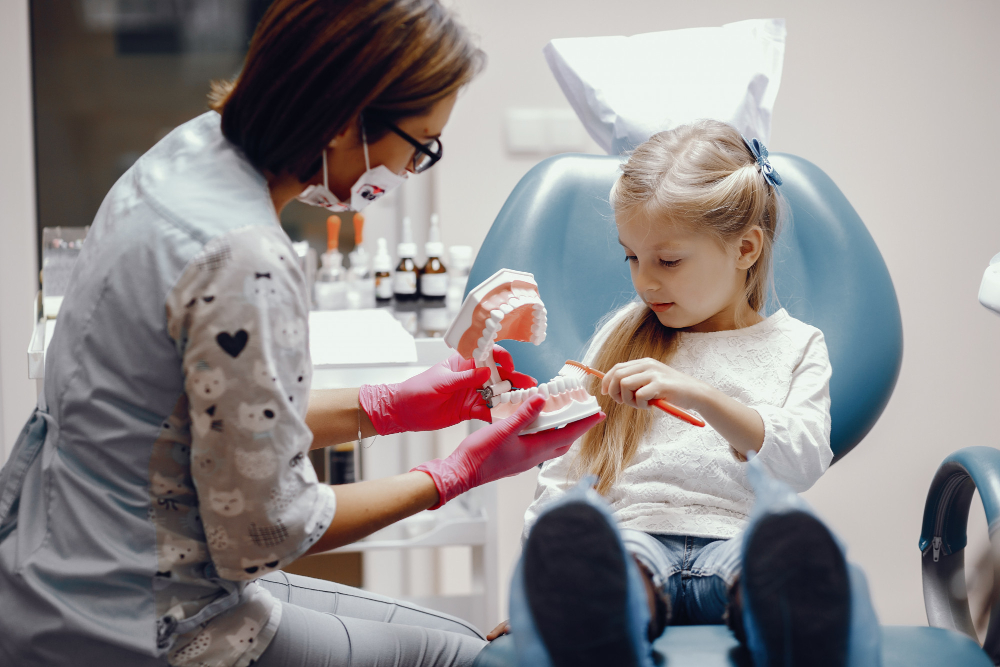
What is Pediatric Dentistry?
Pediatric dentistry is a branch of dental care focused on children. It covers dental health from infancy through the teen years. Because children’s teeth are different from adults’, they need special care. Pediatric dentists are trained to handle kids’ dental needs. They also know how to make children feel comfortable during visits. As a result, children can have a positive experience at the dentist.
Importance of Early Dental Care
Early dental care is very important for children’s dental health. When you start dental visits early, you help prevent problems later. For example, early care can stop cavities before they start. In addition, it teaches kids good oral habits. The American Academy of Pediatric Dentistry suggests a first dental visit by age one. This early start helps children get used to dental checkups.
Common Dental Issues in Children
Children can face many dental problems. However, most can be prevented with good care. Some common issues include:
Because children’s teeth are softer, they can get cavities more easily. Regular checkups help catch these problems early.
Symptoms to Watch For
It is important to notice signs of dental trouble. Early action can prevent bigger problems. Watch for these symptoms:
If you see any of these signs, schedule a dental visit soon.
Diagnosis and Dental Checkups
Regular dental checkups are key for kids’ oral hygiene. During a visit, the dentist will:
Because early diagnosis helps, dentists can treat small issues before they become big problems.
Treatment Options for Kids
Pediatric dental care offers many treatments for children. Some common options include:
Because every child is different, the dentist will suggest the best treatment for your child.
Preventive Tips for Healthy Teeth
Prevention is always better than cure. To help your child avoid dental problems, try these tips:
With these steps, you can help prevent cavities in children and keep their smiles bright.
Home Care and Lifestyle Guidance
Good habits at home are key for children’s dental health. For example, make brushing fun by using colorful toothbrushes. In addition, set a routine for brushing and flossing. Try these ideas:
Because children learn by example, your habits matter too. Show them how to care for their teeth every day.
When to Visit a Pediatric Dentist
It is best to visit a pediatric dentist by your child’s first birthday. After that, schedule checkups every six months. However, see the dentist sooner if you notice pain, swelling, or other symptoms. Pediatric dentists have special training to care for kids. They can also answer your questions about kids’ oral hygiene and dental care.
For more information, you can visit trusted sources like the American Academy of Pediatric Dentistry, CDC, or WHO.
Consult a pediatric dentist for personalized advice on your child’s dental health.